
Modern Damascus Steel: Beautiful, Practical, and Built for Every Kitchen

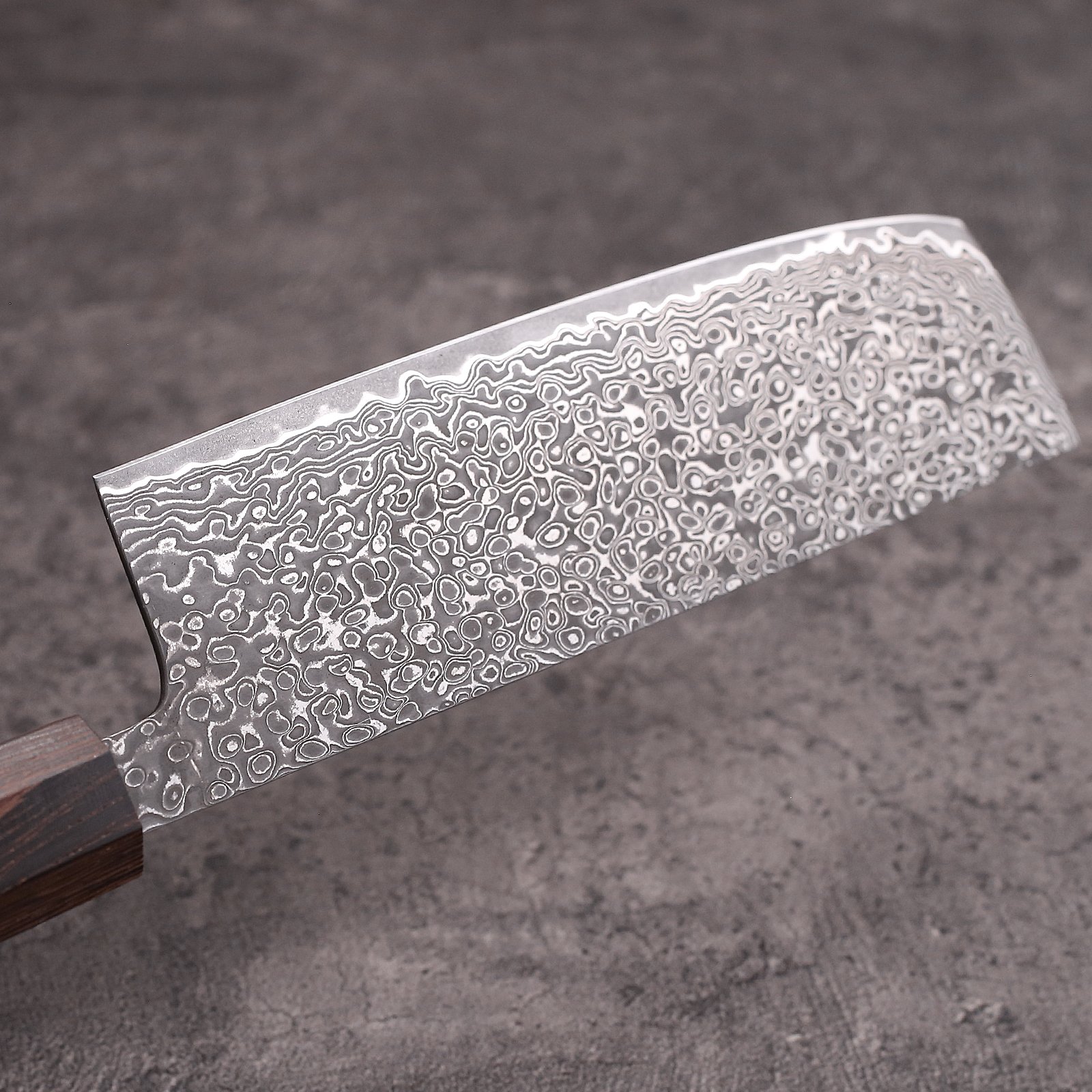
There’s never been a better time to own a Damascus knife. The flowing water patterns, the stainless finish, the serious cutting performance — what was once reserved for collectors and professional chefs is now accessible to anyone who loves to cook. And that’s something worth celebrating.
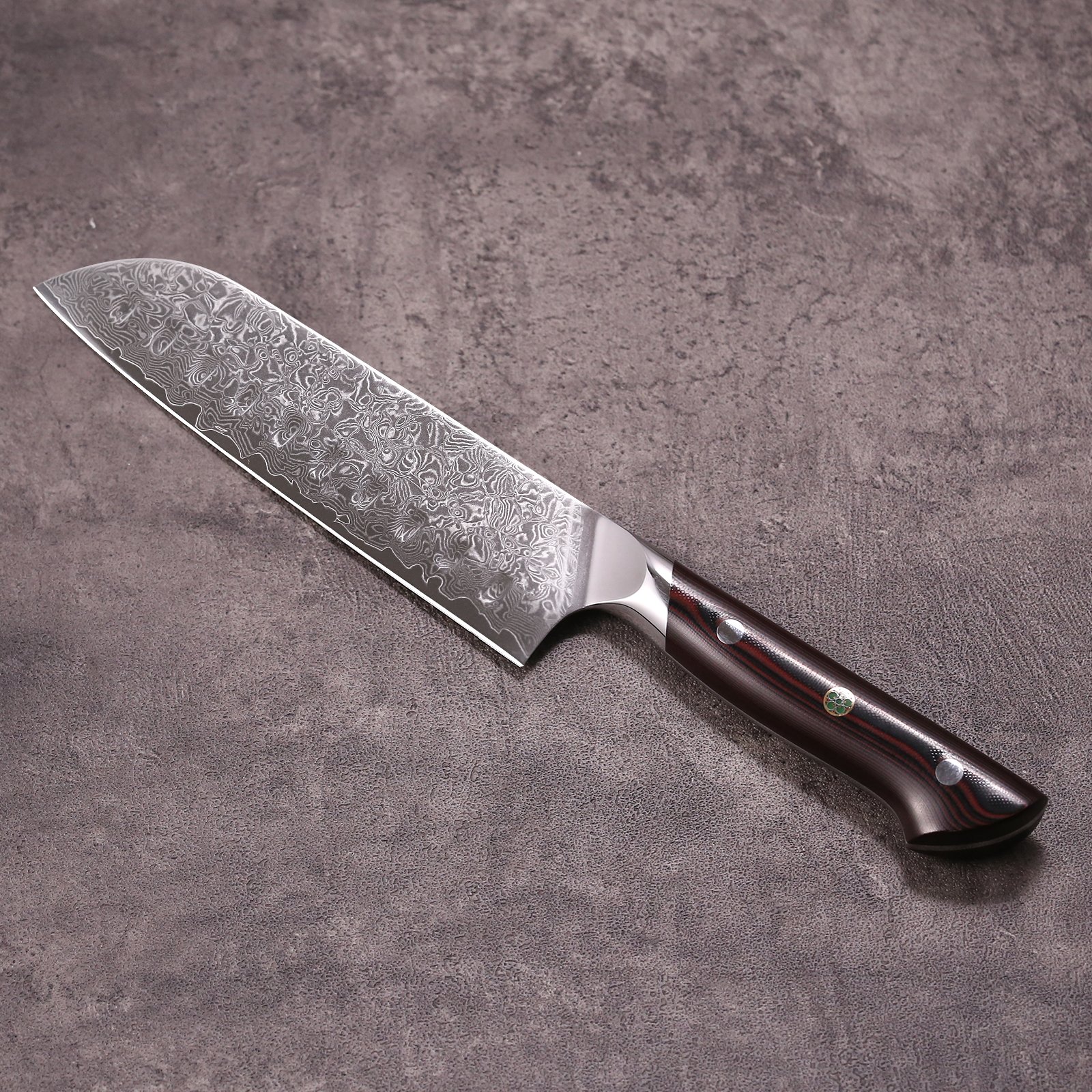
But to truly appreciate what you’re getting, it helps to understand how modern Damascus is actually made. Because once you do, you’ll realize these knives are even more impressive than they look.
Genuine performance at the core
Modern Damascus knives perform excellently in the kitchen — and the reason is simple. The cutting performance comes from the core steel, and today’s core steels are genuinely outstanding.
Depending on the knife, the core is made from steels like VG10, M390, or AUS-10 — the same high-performance alloys used in Japan’s finest single-material knives. VG10 holds a razor edge through daily kitchen use and sharpens with ease. M390 is one of the hardest and most wear-resistant steels available, beloved by chefs who want to go longer between sharpenings. AUS-10 is tough, corrosion-resistant, and a superb everyday performer.
These are serious steels. They produce serious edges. The Damascus construction around them doesn’t compromise that performance — it complements it.
Beautiful by design, consistent by precision
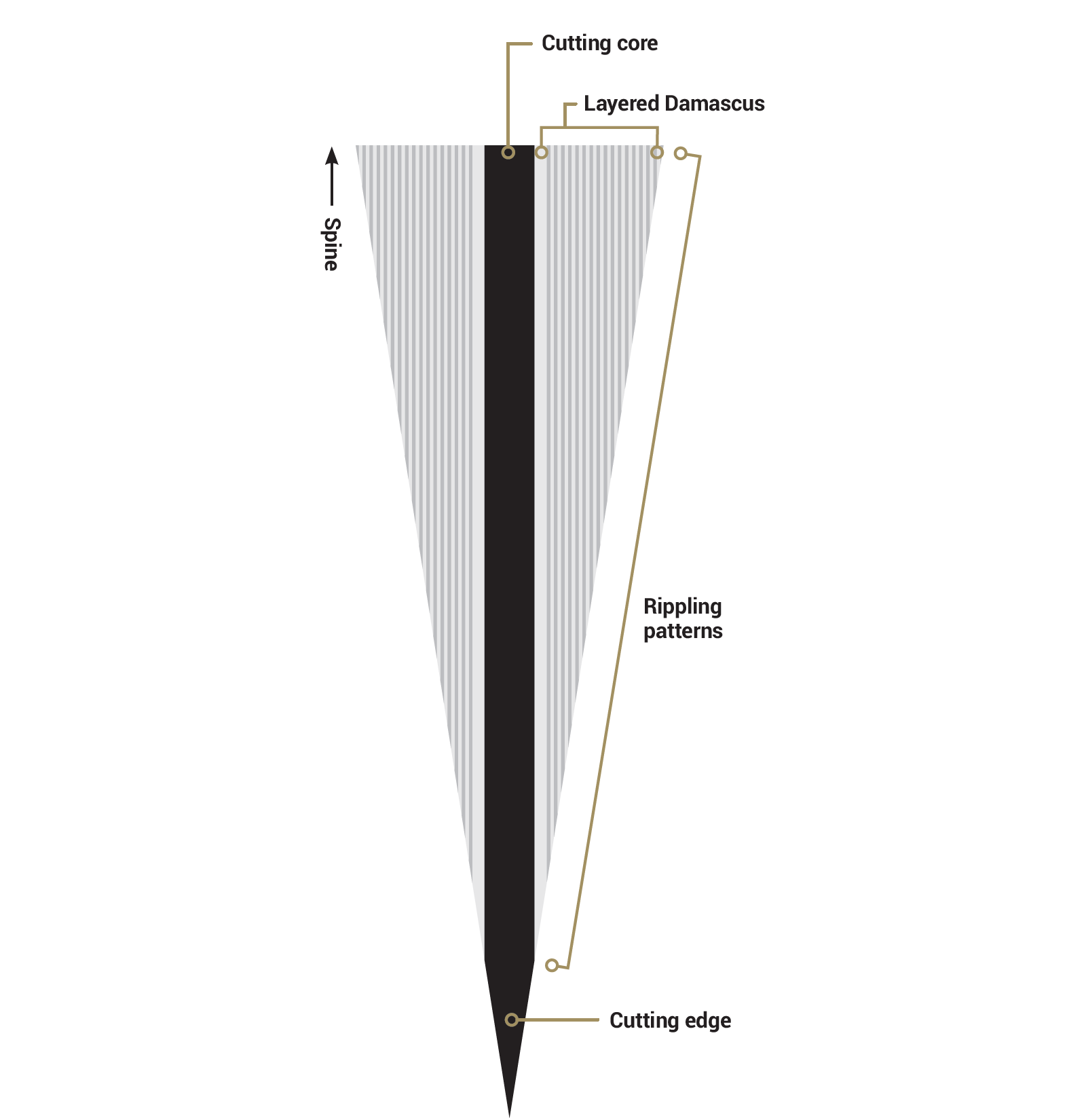
The Damascus pattern you see on the blade surface is the result of a precise, machine-assisted manufacturing process. The core steel is placed carefully in the center of the blade. Stainless steel layers are positioned symmetrically on each side, each layer chosen and arranged deliberately. The whole assembly is welded together, heated to 800–1000°C, and pressed to a final thickness between 2.0mm and 5.0mm. During the acid etching finish, those alternating layers reveal the flowing ripple pattern the blade is known for.
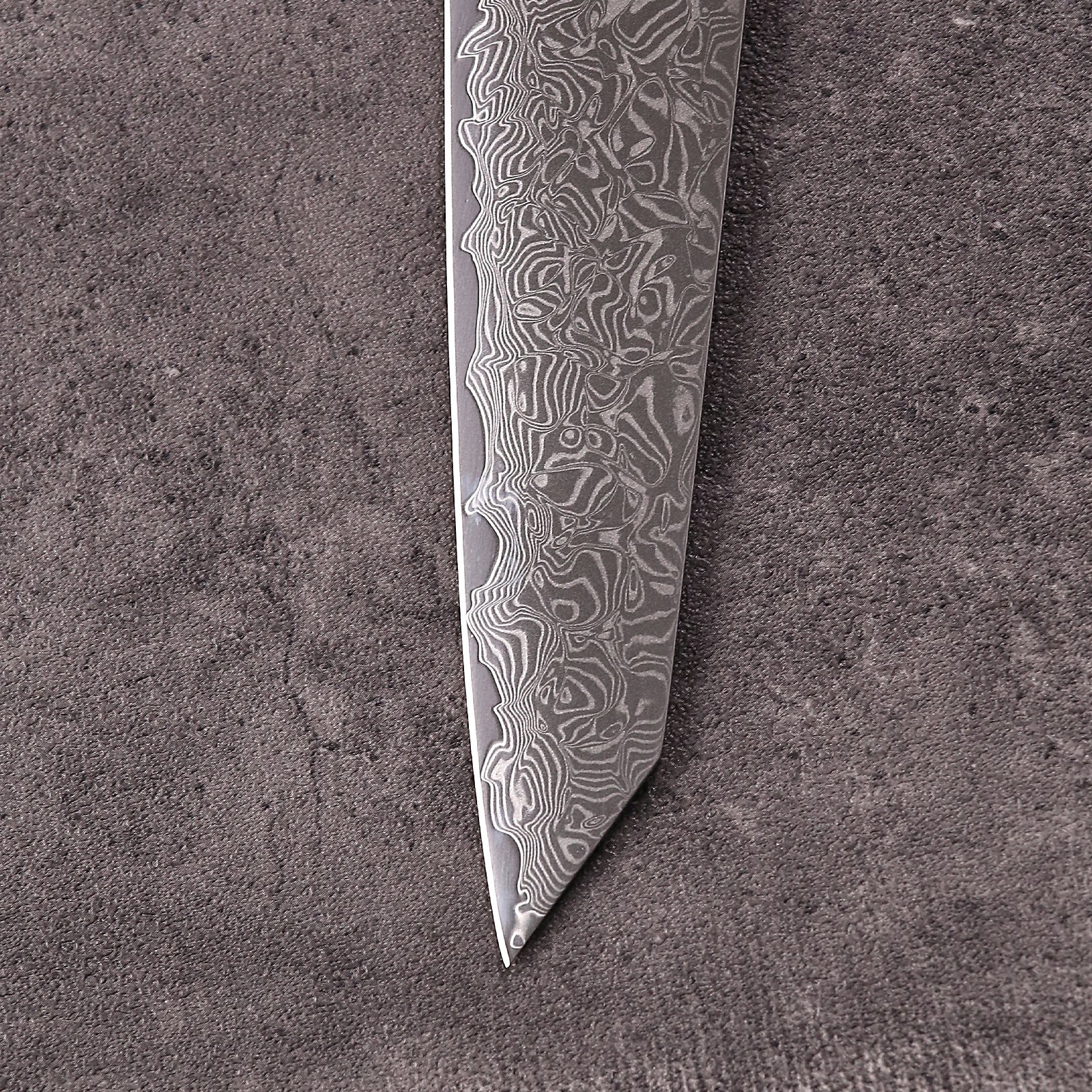
Because the process is consistent and machine-assisted, modern Damascus blades from the same production run will look very similar to one another. That is not a flaw — it is the point. Consistency means every customer receives the same quality, the same pattern depth, the same finish standard. You know exactly what you’re getting before it arrives.
This is fundamentally different from traditional hand-forged Damascus, where a master bladesmith hammers and folds each blade individually. Those knives carry rough, irregular patterns that are genuinely unique — no two are alike — but they are also extremely time-consuming to make and command a very high price as a result. Modern Damascus trades that individual uniqueness for something equally valuable: reliable quality at scale.
Traditional vs. modern: understanding the difference
These are two different products serving two different purposes, and both are honest about what they are.
Traditional hand-forged Damascus is a handcraft object. The pattern is irregular and unique because human hands and heat made it. The process involves real folding, hammering, and individual tempering. Each knife is a one-of-a-kind piece. The cost reflects the hours of skilled labor involved — often hundreds of dollars to thousands for a master-made blade.
Modern Damascus is a precision manufacturing achievement. The pattern is consistent and clean because machines and controlled processes made it. The core steel is excellent, the cladding is stainless, and every blade off the line meets the same standard. The cost is accessible because the process scales — more people can own a genuinely great knife.
Neither is fake. They are simply made differently, for different markets, at different price points.
Stainless steel cladding: practical beauty
One of the most underappreciated features of modern Damascus is that the layered cladding is predominantly stainless steel. This means the blade body is naturally resistant to rust and corrosion — a huge practical advantage in a busy kitchen where knives encounter moisture, acids, and salt every day.
The textured Damascus surface also creates a subtle food-release effect. Those rippling ridges reduce surface contact between blade and food, so sticky ingredients like potato, cucumber, and soft cheese slide away more cleanly. It’s a detail that makes a real difference during prep.
Two types, both excellent
At Knife Forest we carry two modern Damascus constructions, each with its own character:
The core version (san mai) places a high-performance core — VG10, M390, or AUS-10 — at the center, flanked by Damascus cladding on each side. This is the higher hardness option with the best edge retention. Ideal for cooks who want a knife that stays sharp through heavy use.
The coreless version (full layer Damascus) stacks VG10 sheets through the entire blade — 71 alternating layers pressed into a unified structure. Slightly lower hardness, but wonderfully easy to sharpen. A fantastic choice for home cooks who enjoy maintaining their knives regularly.
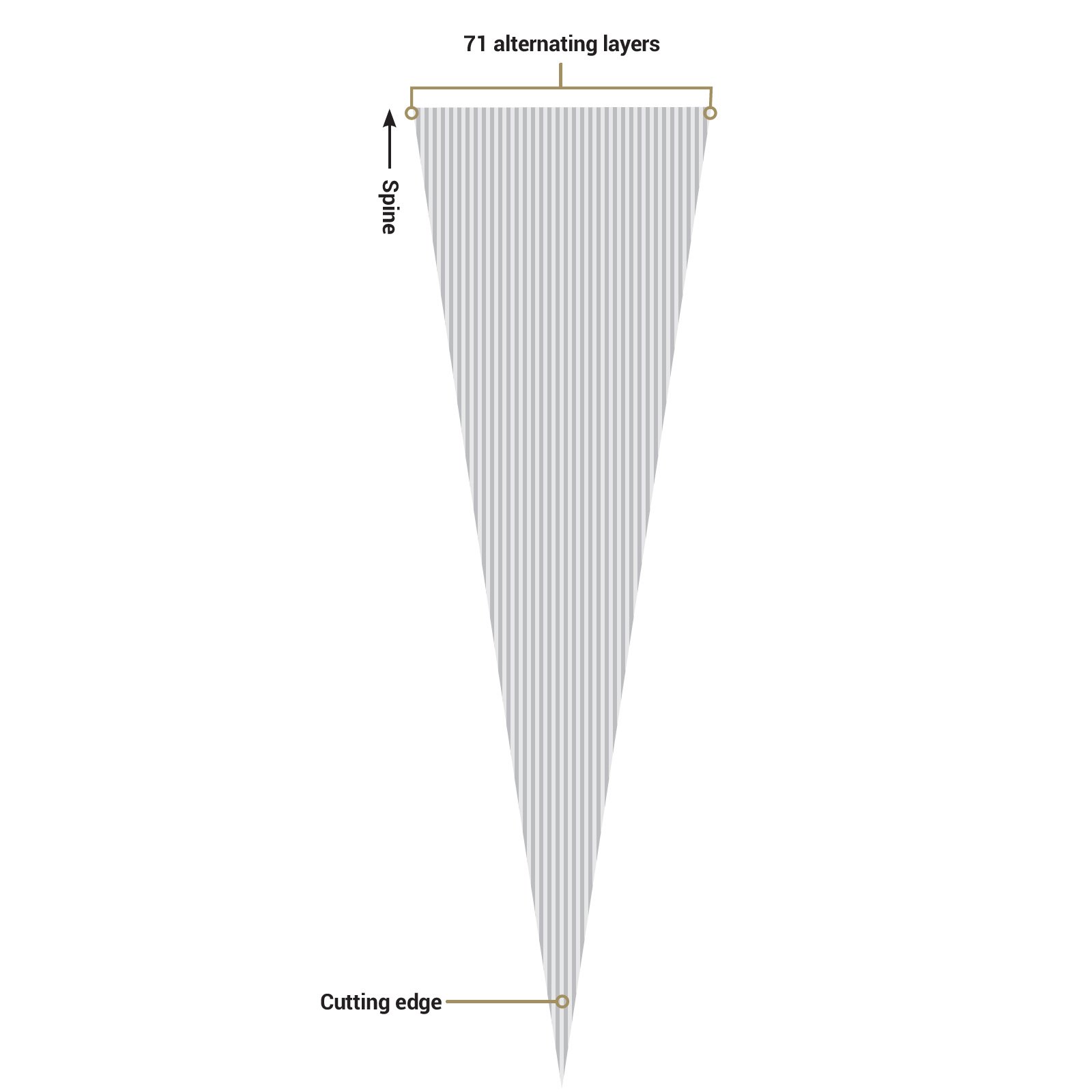
Both are genuine modern Damascus. Both perform well. The choice simply comes down to how you cook and how you sharpen.
Accessible to everyone — and that matters
Historically, a hand-forged Damascus knife made entirely by a master bladesmith was an expensive, rare object. The skill, time, and material cost put it out of reach for most home cooks.
Modern Damascus changes that equation entirely. Through precision manufacturing, we can deliver the same stunning aesthetic, the same stainless protection, and the same excellent core steel performance — at a price that makes these knives genuinely accessible to everyday cooks. More people in more kitchens around the world can now cook with a blade that looks extraordinary and performs beautifully every single day.That’s not a compromise. That’s progress.
Modern Damascus knives are a genuine win on every front. The performance is excellent because the core steels are excellent. The looks are clean and consistent because the manufacturing process is carefully controlled. The stainless cladding keeps rust at bay with minimal maintenance. And the price means you don’t have to be a collector or a professional to own one.
If you’ve been on the fence about Damascus, consider this your invitation. These knives belong in real kitchens — and they’re built to stay there for a long time.
Joseph is the CEO of Knife Forest and has spent over a decade sourcing and testing premium blades. Every Damascus knife in our range comes with full construction and steel disclosure, so you always know exactly what you’re cooking with.