
What Is a Petty Knife? The Complete Guide to the Japanese Kitchen Essential

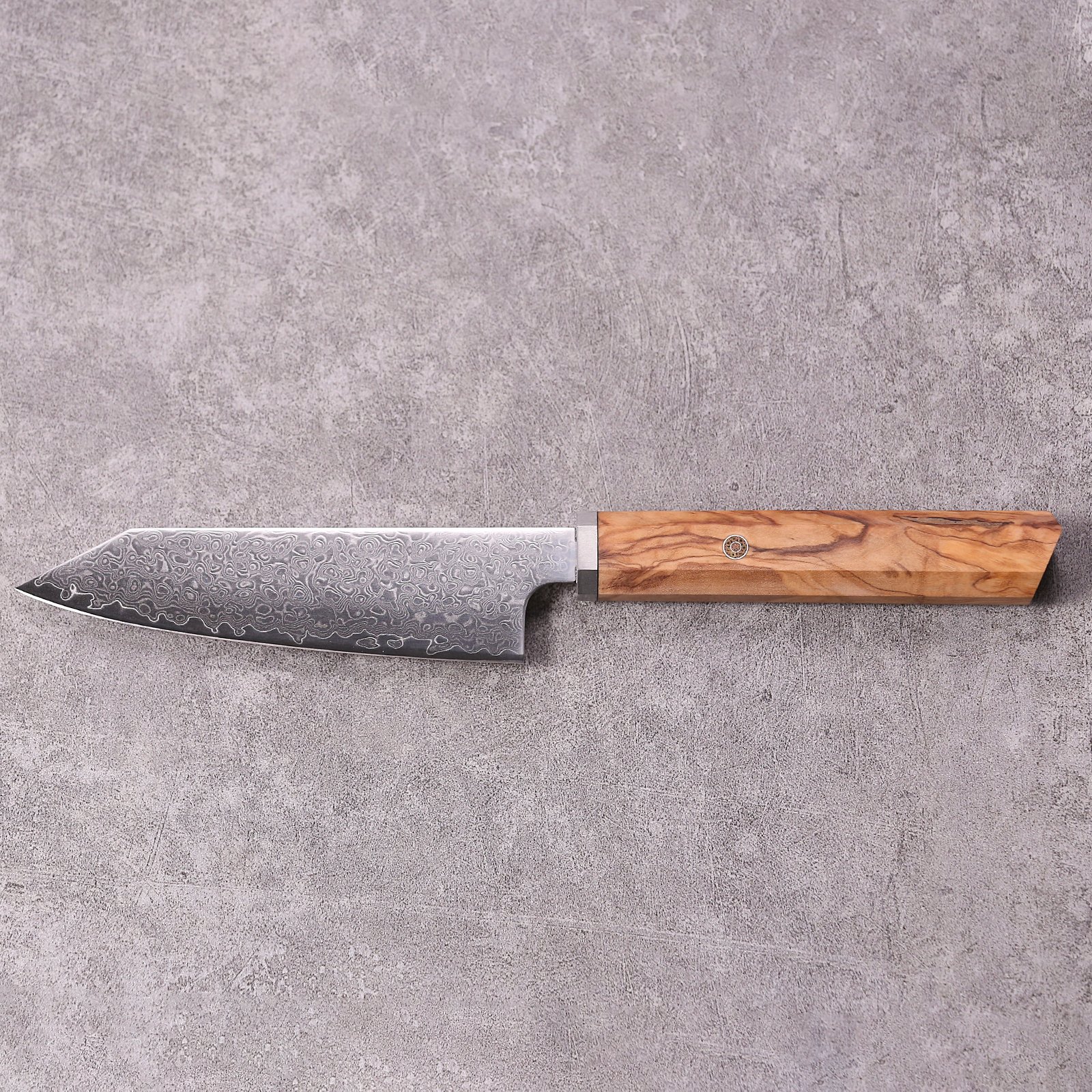
If you’ve been building your knife collection and keep coming across the term “petty knife,” you’re not alone in wondering what it actually does — and whether you need one. The short answer: it’s one of the most useful knives you’re not using yet.
This guide covers everything you need to know about the Japanese petty knife: what it is, what it’s used for, how it stacks up against a paring knife, and how to pick the right one for your kitchen.
What Is a Petty Knife?
A petty knife is a small Japanese utility knife designed for precise, everyday prep work. The name comes from the French word petit, meaning “small” — a fitting description for a blade that sits neatly between a paring knife and a full chef’s knife in both size and function.
In terms of blade length, petty knives typically range from 120mm to 165mm (about 4.7 to 6.5 inches). That makes them noticeably longer than a paring knife, but far more compact than a gyuto or western chef’s knife.
Think of a petty knife as a shrunken chef’s knife with more finesse — slim, nimble, and built for controlled cuts where larger blades feel clumsy or unsafe.
A Brief History
The Japanese petty knife evolved during the Meiji era, when Japan began incorporating Western culinary influences. It developed as a Japanese answer to the Western utility knife, but with a distinctly Japanese character: a thinner blade, harder steel, and a more precise edge geometry.
Unlike its Western counterpart, the traditional petty knife features a narrower profile with a slight curve toward the tip, making it equally capable of precise board work and in-hand cutting.
Petty Knife Uses: What Can You Do With One?
The petty knife earns its place in the kitchen by handling all the “in-between” tasks that are too fiddly for a large chef’s knife but too involved for a small paring knife. Here’s where it shines:
Precision Cutting on the Board
1. Slicing small fruits like strawberries, kiwis, and figs
2. Dicing shallots, garlic, and ginger with control
3. Julienning carrots or cutting fine herb garnishes
4. Segmenting citrus fruits cleanly
In-Hand Work
1. Peeling vegetables and fruits away from the cutting board
2. Coring apples or removing strawberry stems
3. Trimming artichoke hearts or asparagus tips
Protein Prep
1. Trimming fat and silver skin from small cuts of meat
2. Deveining shrimp
3. Light deboning on chicken thighs or fish portions
Herb and Garnish Work
1. Mincing fresh herbs without crushing them
2. Creating thin, decorative vegetable cuts for plating
Because of its compact size, the petty is also great outside the kitchen — it’s a popular choice for prep work in the garden, trimming fresh ingredients right at the source.
Petty Knife vs Paring Knife: What’s the Difference?
This is the comparison most buyers wrestle with. Both are small, both are sharp, and both handle detailed work — so which one do you actually need?
| Feature | Petty Knife | Paring Knife |
|---|---|---|
| Blade length | 120–165mm | 75–100mm |
| Best use | Board work + in-hand | Primarily in-hand |
| Blade shape | Slight curve toward tip | Straighter, more rigid |
| Versatility | Higher — works like a mini chef’s knife | More limited to fine detail |
| Knuckle clearance | Yes — taller blade gives board clearance | Less clearance on a board |
The key difference comes down to versatility. A paring knife excels at very fine, in-hand detail work — peeling apples, scoring dough, removing seeds. But it feels cramped when you move to a cutting board.
The petty knife does both. It handles the in-hand tasks a paring knife would cover, and it adds the reach and clearance needed for slicing and chopping on a board. For most home cooks, a petty knife is simply the more useful of the two.
The verdict: If you’re choosing one small knife, get the petty. You can always add a dedicated paring knife later if you do a lot of fine garnish or pastry work.
Petty Knife vs Western Utility Knife
The petty and the Western utility knife occupy the same role in the kitchen, but they feel very different in use. Western utility knives tend to have thicker blades made from softer steel — functional, but without much finesse.
A Japanese petty knife is typically thinner, harder, and sharpened to a more acute angle. That means a cleaner slice through delicate ingredients, better edge retention over time, and a noticeably lighter feel in hand. For everyday precision work, the petty consistently outperforms its Western equivalent.
Choosing the Right Petty Knife Size
Petty knives come in three common sizes, each with a different sweet spot:
120mm (about 4.7″) — The smallest option. Great for pure in-hand work: peeling, coring, and small detail cuts. Limited on the cutting board due to size.
150mm (about 5.9″) — The most popular size. Handles both in-hand tasks and cutting board work comfortably. This is the one most home cooks should start with.
165mm (about 6.5″) — The longest. Closer to a small chef’s knife in feel. Good for cooks who want more reach on the board while keeping a lightweight blade.
For most buyers, the 150mm petty knife is the sweet spot — versatile enough for daily use, compact enough for detailed work.
What Steel Should Your Petty Knife Be Made From?
Japanese petty knives are made in a range of steels, each with its own trade-offs:
Stainless steel (e.g., VG-10, AUS-10): Corrosion-resistant, low maintenance, and easier to sharpen. A solid choice for home cooks who want a reliable everyday knife without strict care requirements.
High-carbon steel (e.g., Aogami Blue #2, White Steel #1): Harder than most stainless, holds a finer edge for longer, and develops a natural patina over time. Requires hand washing and drying after use. Preferred by serious home cooks and professionals who prioritize cutting performance.
Damascus: Often layered over a VG-10 or similar core, Damascus petty knives offer both performance and striking visual appeal. The pattern is aesthetic — the core steel determines cutting ability.
If you’re new to Japanese knives, a stainless VG-10 petty is a forgiving starting point. If you already know your way around a whetstone, carbon steel will reward you with exceptional sharpness.
How to Use a Petty Knife Properly
The petty knife is typically held in a pinch grip — thumb and index finger pinching the blade just above the heel, with the remaining fingers wrapping the handle. This gives you the most control for both cutting board tasks and in-hand work.
For in-hand cuts, rest your thumb on the ingredient in your guide hand to add stability. Move slowly and deliberately — the petty’s compact size is an advantage, but it still demands respect.
Unlike a large chef’s knife, a petty doesn’t need a cutting board for every task. Use it freely in-hand for peeling and trimming, then move to the board when you need slicing or chopping motions.
Caring for Your Petty Knife
A petty knife — especially a Japanese one — will reward proper care:
Always hand wash. Never the dishwasher, which can damage both the blade and handle.
Dry immediately after washing to prevent rust or water marks, particularly on carbon steel.
Use a soft cutting board — wood or plastic. Avoid glass, ceramic, or stone surfaces that will destroy your edge.
Sharpen on a whetstone for the best results. A 1000/3000 grit progression will restore the edge; finish on a 6000 grit stone for a refined, polished edge.
Store on a magnetic knife bar or in a knife roll — never loose in a drawer.
With consistent care, a quality petty knife will stay sharp and serve you well for years.
Do You Really Need a Petty Knife?
If your kitchen runs on a chef’s knife and nothing else, a petty knife will change the way you prep. It handles a huge range of small-to-medium tasks with a level of control and comfort that a large blade simply can’t match.
Professional chefs reach for their petty knife constantly — it’s often the blade that spends the most time in hand during a busy prep session. Home cooks who make the switch quickly wonder how they managed without one.
The petty isn’t a novelty or a niche specialty knife. It’s a genuine kitchen workhorse — just a compact one.
The Japanese petty knife sits in a perfect sweet spot: small enough for detailed, in-hand work, large enough to handle real prep tasks on a cutting board. It’s more versatile than a paring knife, more precise than a Western utility knife, and once you own one, it becomes one of the most-reached-for blades in your collection.
Whether you’re trimming herbs, slicing shallots, or peeling fruit at the counter, the petty knife does it cleanly, comfortably, and with the kind of precision that makes cooking genuinely more enjoyable.
Browse our selection of Japanese petty knives at KnifeForest.com and find the right size, steel, and handle to match your kitchen.