
Wa Handle vs Western Handle Santoku Knives: Which Feels Better?

Wa Handle vs Western Handle Santoku Knives: The Real Difference Most Buyers Overlook
When people start looking for a good Santoku knife, they usually focus on steel type, hardness ratings, or whether the knife is made in Japan. Those details certainly matter, but there’s another feature that often has a bigger impact on how a knife feels in daily use: the handle.
Today, most Santoku knives fall into one of two categories. Some use a traditional Japanese wa handle, while others are fitted with a Western-style handle featuring a stainless-steel bolster and often a full tang construction. Although the blades may look similar at first glance, these two designs create very different experiences on the cutting board.
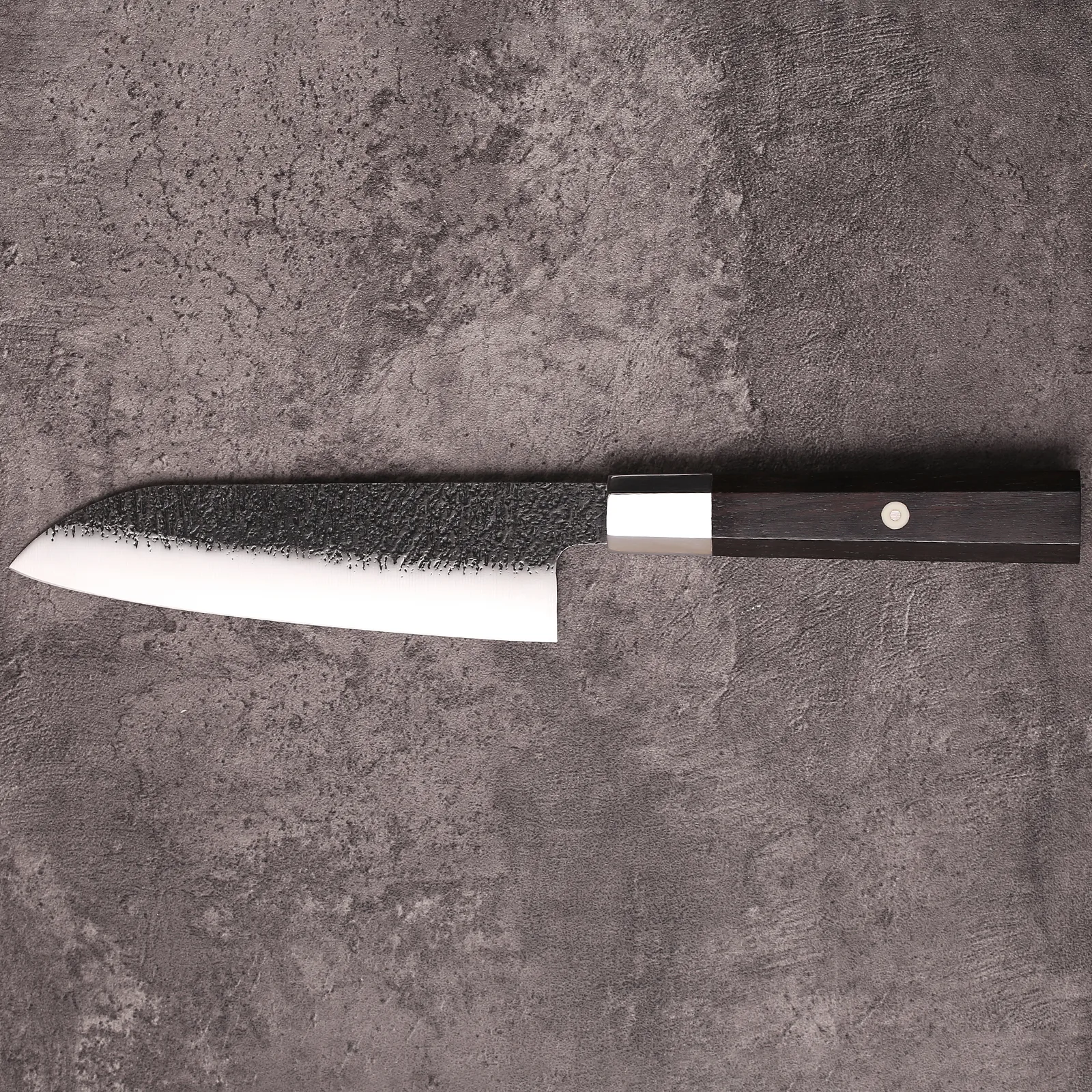
The traditional wa handle is what many people picture when they think of a Japanese kitchen knife. Rather than being built around a full tang, the handle is mounted onto the blade tang and usually made from wood such as magnolia, walnut, or pakkawood. Because there is no heavy stainless bolster and less steel extending through the handle, wa-handle Santoku knives tend to feel surprisingly light in the hand.
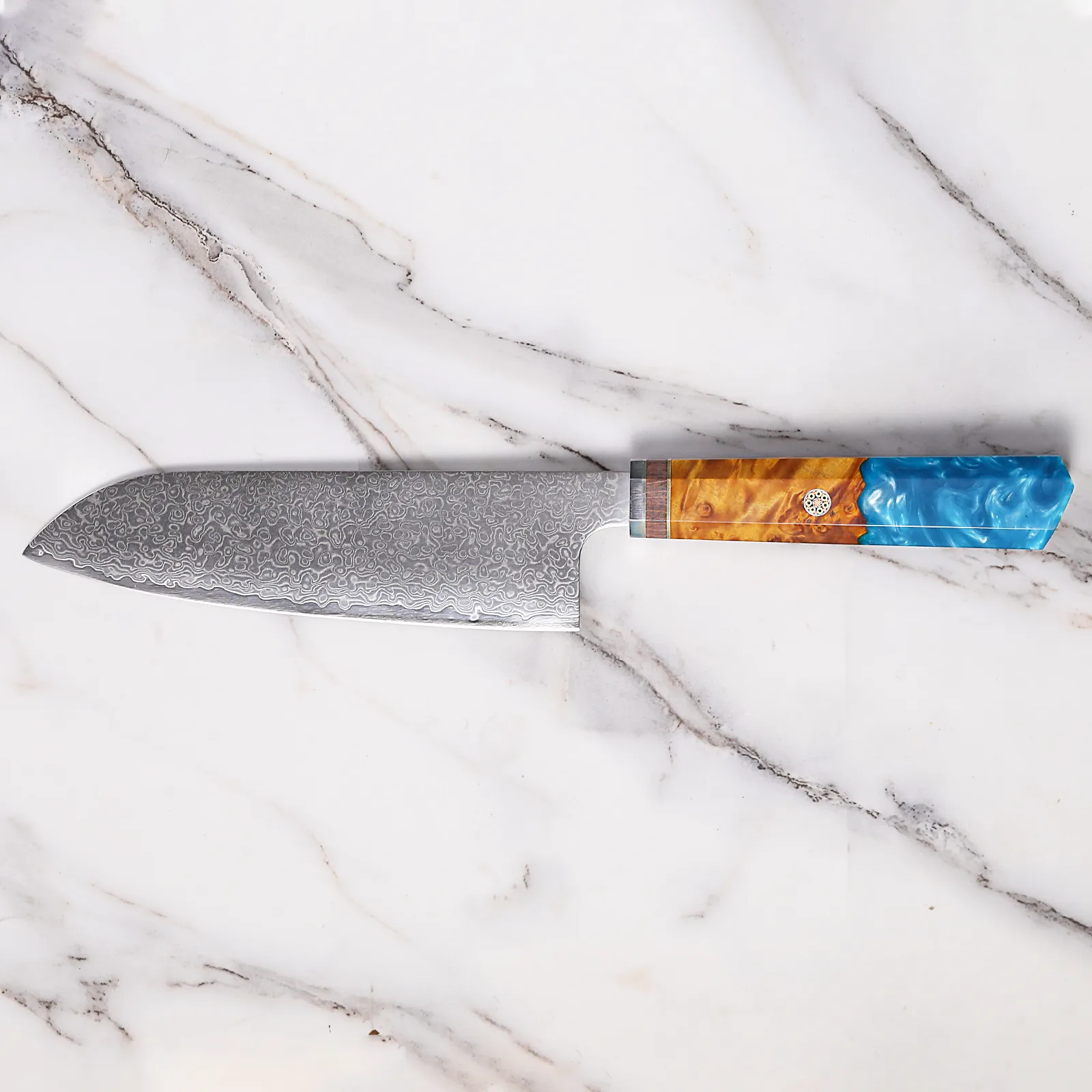
That lighter weight changes the character of the knife. Instead of feeling anchored in the handle, the balance shifts slightly forward toward the blade. For vegetable preparation, this can make the knife feel fast and agile. Many cooks who spend long periods slicing onions, cabbage, or herbs appreciate how effortless a wa-handle Santoku feels after an hour of prep work.
Western-handle Santoku knives take a different approach. Borrowing construction methods from European chef knives, they typically feature riveted handle scales, a visible full tang, and often a stainless bolster between the blade and handle. The additional steel adds weight, giving the knife a more solid and substantial feel.
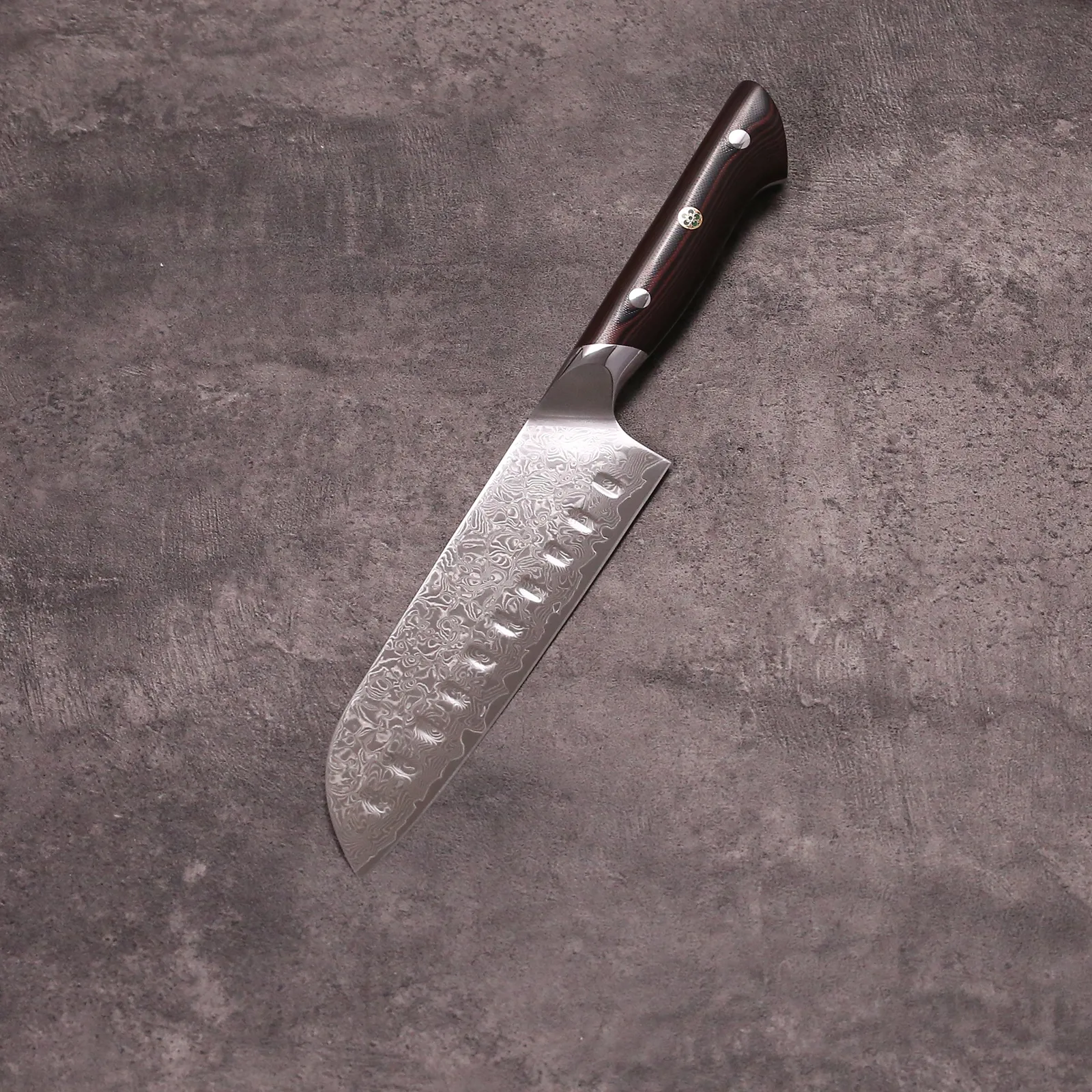
For many home cooks, this design feels immediately familiar. If you’ve used a German chef knife for years, a Western-handle Santoku usually requires little adjustment. The extra weight can also give a sense of stability, especially when tackling denser ingredients such as sweet potatoes, squash, or large carrots.
Interestingly, neither design is necessarily better.
Many beginners assume a full tang automatically means a superior knife. While full tang construction certainly adds strength and durability, a Santoku is a precision kitchen tool rather than a survival knife. A properly made wa-handle Santoku can last decades when used as intended. Japanese knife makers have relied on this construction method for generations, and there is a reason it remains popular among professional chefs.
The choice often comes down to personal preference. Some cooks enjoy the nimble feeling of a lightweight wa handle, while others prefer the confidence that comes from a heavier Western handle. After all, a knife that feels natural in your hand is more important than any specification written on a product page.
At KnifeForest, we’ve noticed that enthusiasts who appreciate traditional Japanese craftsmanship often gravitate toward wa-handle Santoku knives. They enjoy the balance, the minimalist aesthetic, and the connection to Japanese knife-making traditions. Meanwhile, many first-time Santoku buyers find themselves more comfortable with Western-handle models because the transition from a standard chef knife feels seamless.
If you’re shopping for the best Santoku knife, don’t focus solely on the blade steel. Pay attention to the handle construction as well. The difference between a wa handle and a Western handle may seem minor on paper, but it has a tremendous influence on balance, comfort, and the overall cutting experience. In many cases, that difference is what determines whether a knife becomes your favorite tool in the kitchen or simply another blade in the drawer.